Lifestyle Berries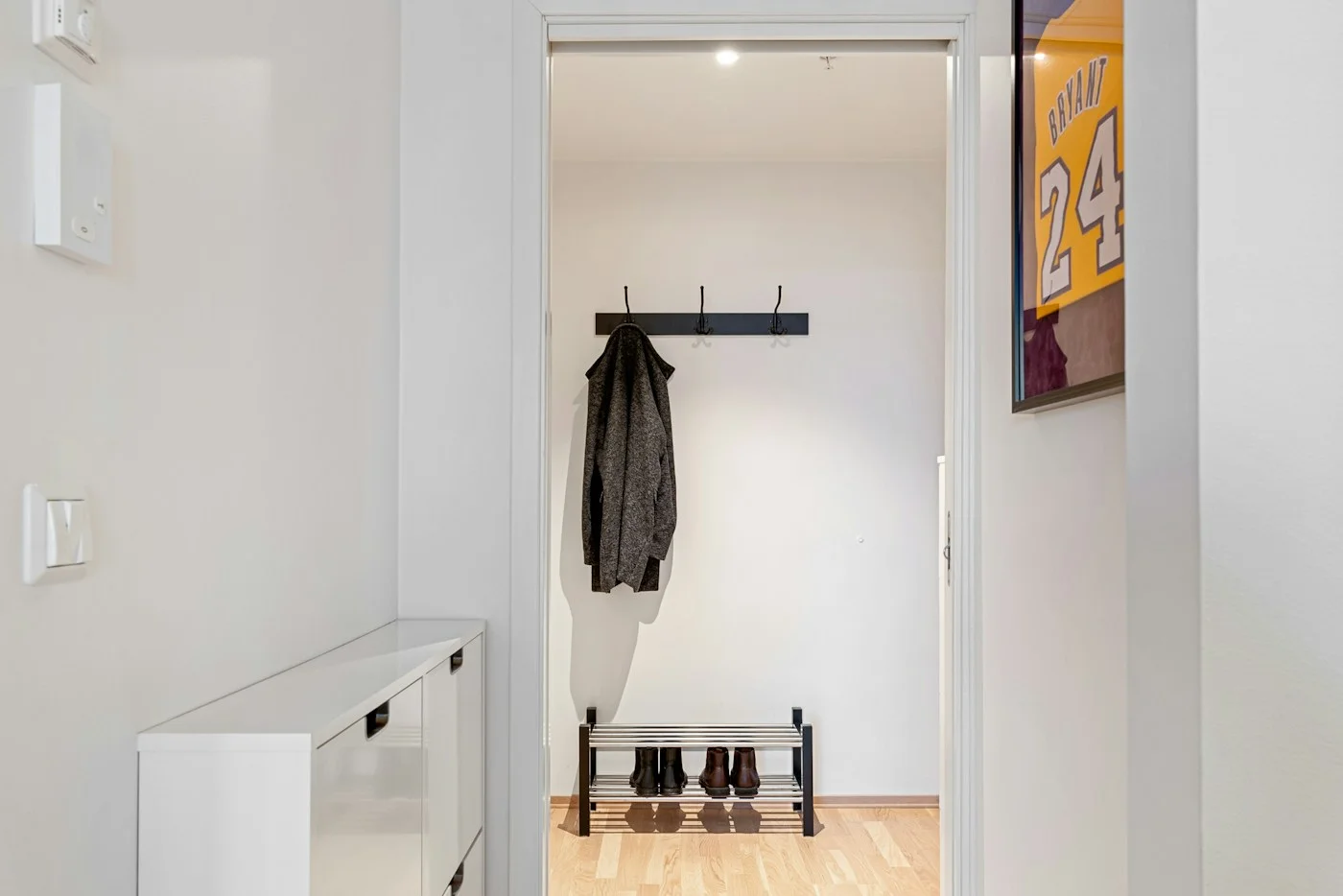
In this guide
In a small entryway, the problem usually arrives in waves: a bag at lunchtime, damp shoes after school and a parcel just as someone needs to get out. The goal is not to display every coat beautifully. It is to make coming and going easier while keeping the doorway clear.
Measure the moving parts
Measure the floor area with the door fully open, including the space used by its handle. Check nearby cupboard doors and the route to the next room. A cabinet that fits the wall can still be the wrong choice if its drawers block the passage. Mark the proposed footprint with removable tape before ordering.
Then count what actually arrives each day. Keep daily shoes near the door and move occasional pairs elsewhere. If several people share the entrance, give each person a small, clear allocation. Storage works better when it has a limit than when it quietly expands to accommodate everything you own.
Choose the simplest useful system
An open shoe rack makes pairs visible and easy to put away, but it also shows dust and mismatched footwear. A closed cabinet hides visual clutter while requiring enough depth for your largest shoes. Tilt-out styles can be narrow, yet they may not suit boots or bulky trainers. Compare the interior measurements rather than relying on the exterior width.
Hooks make sense for bags and a few everyday coats. Check the wall material, fixing requirements and rated load, and install according to the manufacturer's guidance. Adhesive hooks are not an interchangeable substitute for structural fixings. Consider children and accessibility when choosing height, while keeping hanging items away from the door swing.
| Storage type | Good fit for | Compromise |
|---|---|---|
| Open shoe rack | Quick access to a small daily rotation | Visible contents and regular dusting |
| Closed shoe cabinet | A narrow entrance with clear opening space | Interior size may exclude boots |
| Bench with shelf | Sitting to change shoes | Uses more floor depth |
| Wall hooks | Bags and frequently worn coats | Requires suitable secure mounting |
Plan for wet days
Look at where damp shoes and umbrellas will drip before putting them inside a closed cabinet. A washable or wipeable tray can contain everyday mess, but its raised edges should not create a trip point in the walking route. Choose a size that holds the items you use rather than a mat that covers the whole entrance.
Make sure the floor underneath can dry. Pick up the tray regularly to clean and inspect beneath it, especially on finishes sensitive to standing moisture. A wet-weather plan also helps protect the storage itself: check whether unfinished wood, fabric bins or woven baskets are appropriate for the location.
Give small items one destination
A shallow dish can hold keys, and one small folder can catch paperwork that needs attention. Avoid adding a large console just to store a few tiny objects. If parcels tend to build up, give them a temporary spot and move them when unpacked rather than making permanent storage for packaging.
The same idea works in a small workspace: active items need a clear destination, not more containers. Keep the essentials for your walking routine near the exit so leaving for a short outing remains easy.
Spend carefully
- Spend on secure construction, appropriate fixings and dimensions that preserve the passage.
- Choose surfaces you can clean without an elaborate care routine.
- Skip matching bins until you know exactly what they will hold.
- Check assembly requirements, furniture anchoring guidance and return shipping before buying a heavy cabinet.
Before you buy: common questions
Is a bench always worth the space?
It is useful if someone regularly sits to change shoes and the passage stays clear. If nobody uses it, a shallower rack may solve the actual problem. Test with an existing chair temporarily before committing.
How do I stop the area filling again?
Set a weekly two-minute return routine: move spare footwear, coats and paperwork to their longer-term homes. Storage cannot decide what belongs there. A small system stays useful when daily items get priority and occasional belongings move on.
Have a correction or a question about this guide? Contact the editorial desk.